
Table of Contents
Screen plugging happens when particles lodge in the openings and reduce the area available for separation. To prevent it, identify which particles are becoming trapped, how closely their shape matches the opening, and whether feed conditions are making the problem worse. A blocked opening caused by a wedged grain needs a different explanation from one covered by a sticky powder film.
The first useful question is physical: what is inside the gap? A photograph or inspection made after the required isolation can show whether there are individual trapped particles, a coating, or a mixture of both. Once the mechanism is clear, a material trial can compare suitable screen media or operating arrangements without changing the intended size boundary blindly.
Case one: a grain is almost the size of the gap
Imagine a rounded grain approaching a square opening that is only slightly smaller than part of the grain. It may enter partway and become wedged. The grain then occupies a passage that many smaller particles could otherwise use. Repeating that event across a deck gradually reduces useful open area.
This is a near-size problem. A feed rich in material close to the opening size can create more opportunities for lodging than a mixture made mainly of much smaller and much larger pieces. Two samples with the same material name can therefore behave differently if their size distributions differ.
The important evidence is not just the average particle size. A small but significant fraction near the chosen opening may dominate the plugging behavior. A representative size analysis helps describe that fraction and gives a screen-media trial a better basis than a coarse visual impression of the feed.
Case two: shape allows entry but prevents passage
Irregular particles do not have one simple diameter. A thin flake may present a narrow edge to an opening, enter, and then catch on a wider dimension. A long particle may behave differently depending on its orientation. The shape of the opening interacts with those dimensions.
This is why changing from one opening geometry to another can change both plugging and the composition of the passed material. A slot may give some particles a different passage opportunity from a square opening. That can be useful for a suitable task, but it can also change what the separation means.
Do not treat every geometry change as a free improvement. The required product boundary still has to be checked using the real fractions. Less plugging accompanied by unacceptable elongated particles in the fine product may not solve the original problem.
Case three: damp fines hold trapped grains in place
A lodged particle can become part of a larger deposit when damp fines accumulate around it. The original plugging mechanism and a coating mechanism then reinforce each other. An inspection may reveal both hard grains in openings and a softer material covering the surrounding surface.
If the problem appears mainly after rain, a washing change, or different storage, record the material condition. Moisture can change adhesion and the way grains form clusters. It does not follow that the nominal screen opening has become wrong, even if the visible result changes sharply.
The response may need to address the feed condition as well as the media. An anti-plugging surface cannot be assumed to correct unsuitable clay content, uncontrolled water, or a material that has changed from free-flowing grains into sticky agglomerates. Describe those changes separately so the trial can test a defined cause.
Case four: the deck is not using its available area
Uneven feeding can concentrate material in one lane. That lane sees a deeper bed and more repeated particle contact, while other areas receive little material. Plugging may then be concentrated locally. A whole-deck capacity complaint can begin with a much narrower feed-distribution issue.
Look at where the plugged openings occur relative to the inlet and material path. If the pattern is concentrated near one side, compare the feed arrangement and safe external observations of movement. The pattern does not prove one cause, but it tells you where to begin investigating.
An overloaded bed can also hide whether the media are actually plugged. Fine particles remaining at the coarse outlet may simply have failed to reach openings. Inspect the isolated surface before assuming that every poor-separation symptom comes from lodged particles.
Select a media trial that preserves the question
Potential approaches can include suitable self-cleaning media, a different wire or panel arrangement, or another compatible opening geometry. The appropriate choice depends on the material and machine. Support, tension, clearances, and attachment must remain suitable for the design.
A thinner wire can increase open area at the same nominal opening but may change durability and support requirements. A flexible arrangement may help release some lodged particles but is not automatically suited to every load. These are tradeoffs to test, not universal upgrades.
Define the intended separation before the trial. Record the actual opening, media construction, feed condition, and duration. Compare both the condition of the surface and the material at every outlet. Otherwise a trial may appear successful simply because it has shifted the size boundary or allowed bypass.
| Evidence | What it suggests testing | What still needs checking |
|---|---|---|
| Separate near-size grains in gaps | Compatible media and opening arrangement | Product size and recovery |
| Flakes lodged edge-first | Shape-sensitive passage behavior | Whether new geometry admits unwanted particles |
| Grains surrounded by damp deposits | Feed condition plus surface behavior | Moisture and fines changes |
| Plugging concentrated in one lane | Feed distribution and local loading | Installation and media condition |
Clearing is not the same as prevention
Cleaning a plugged surface restores openings for the moment. Prevention means reducing the recurrence under representative operation. If a deck is clear at the start of every run but repeatedly plugs after an hour, a short clean-mesh demonstration does not establish a solution.
Record when plugging begins and how it develops. Compare a consistent run duration before and after a permitted change. Include any manual interruption or cleaning in the record, because a result maintained only by frequent intervention is different from sustained operation.
Clearing must follow the equipment's shutdown and isolation procedure. Do not strike, probe, or brush a running surface. Sharp or forceful tools can damage openings, and a damaged mesh can change the separation while appearing to improve flow. Follow the specified method for the actual media.
Read the discharge alongside the deck
As useful open area falls, more fine material may leave with the coarse fraction. That is a plausible consequence, but it should be checked with samples taken by an approved method. A coarse outlet can also contain fines because of excessive travel speed, a deep bed, or feed changes even when the surface is clear.
Watch for a second problem after a media change: unexpectedly large pieces in the fine fraction. Possible explanations include damage, bypass, a different opening, or particle shape. A higher passing rate alone cannot establish that the separation has improved.
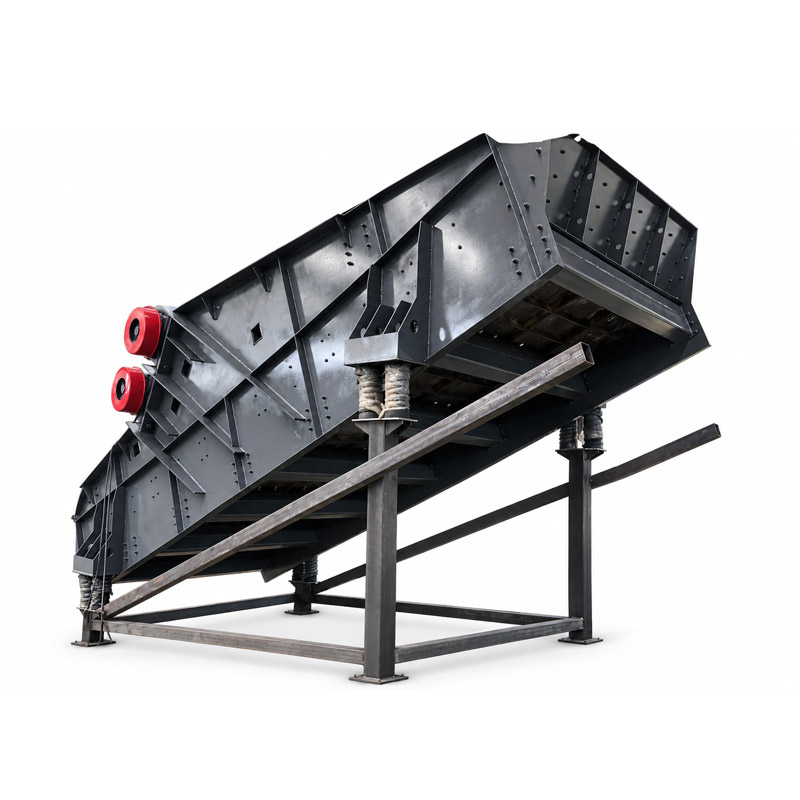
Dongheng's mining circular vibrating screen is an example of a screen family used with coarse mineral and aggregate duties. The product family identifies a possible application context; it does not determine which media will solve an individual plugging problem.
Keep a short record that can be compared later
Useful records describe the trapped particles, where they occur, material moisture, the actual opening, and the point at which output changes. Include a safe inspection image if available. The same information makes it easier to distinguish plugging from blinding when the problem returns under different conditions.
For background terminology, see the mechanical screening reference. The practical sequence is to identify the blockage, connect it to particle size and shape, test a compatible response, and confirm the intended fractions. Prevention is demonstrated by sustained useful separation, not just by an empty-looking mesh at the beginning of a run.
Is plugging the same as blinding?
The terms can be used loosely. Here, plugging means lodged particles and blinding means a coating or layer. Describe the actual condition to avoid confusion.
Should the opening simply be made larger?
Only if the required separation allows it. A larger opening changes the product boundary and may admit material that should be rejected.
Can particle shape matter as much as size?
Yes. Flakes and elongated particles can enter and lodge differently from rounded grains with a similar nominal size.
Why does plugging take time to appear?
Individual lodging events and deposits can accumulate gradually. A trial should run long enough to represent the period in which the problem occurs.
What proves that a media change helped?
Comparable evidence of reduced plugging, acceptable fraction quality, useful recovery, and sustained operation is stronger than an increased passing rate alone.