
Table of Contents
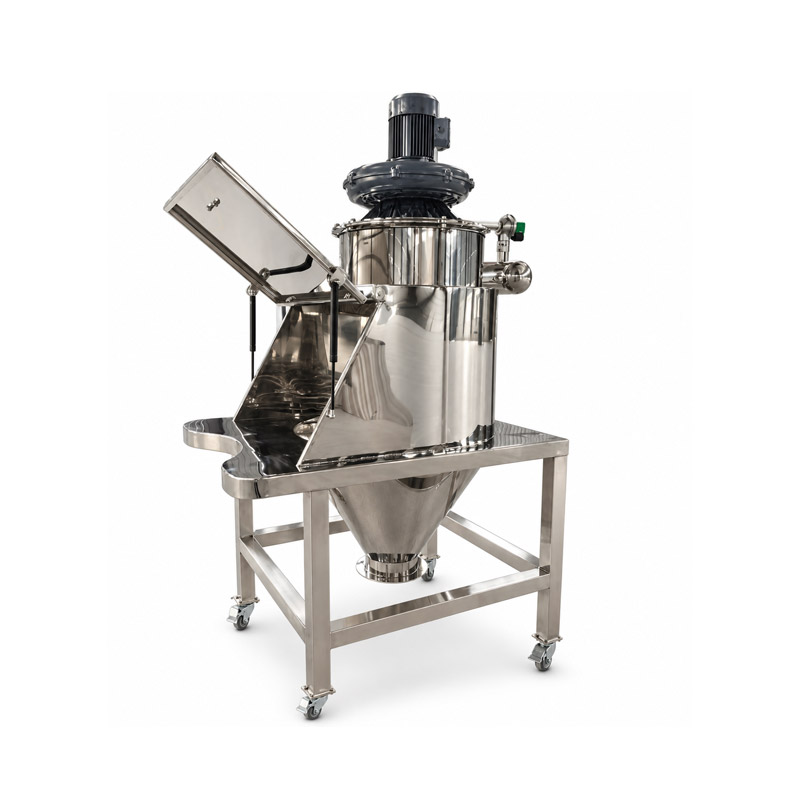
A dust free feeding station gives an operator a controlled place to empty smaller bags into a material-handling process. The bag is opened above a receiving hopper, and an extraction or filtration arrangement helps manage powder released at the opening. The material then moves toward the next step, such as screening, mixing, or conveying.
“Dust free” is a common equipment name, not proof that no particle can escape in every situation. The result depends on the material, the airflow arrangement, the operator's handling, the filters, and the connected process. Looking at a single bag from arrival to disposal makes those relationships easier to understand.
Before the bag is opened
The bag arrives carrying both the product and any dust or contamination on its outside. It needs a suitable place to rest while it is handled. The receiving area should be ready before opening begins, so the operator does not have to hold an open bag while clearing space or dealing with a full hopper.
A station's grate or support surface can help hold the bag while material is emptied. Its design also affects what might enter the hopper. A grate is not automatically a fine screening surface, and it does not establish that packaging fragments or other contaminants will be removed. The actual separation function needs to be identified separately.
The material's documented handling requirements remain important. Some powders need specific exposure controls, contamination precautions, or combustible-dust measures. A general station name cannot determine these from the material's appearance. The bag-opening method and any tools used should follow the site's approved procedure.
Opening creates a short, concentrated disturbance
When a bag is cut or untied, air can move out of the bag and carry fine particles. Tipping and squeezing the bag can release more dust. Dropping powder through a height also displaces air from the receiving space. These short events explain why a quiet-looking hopper can still produce visible dust during one part of the task.
The station's capture arrangement needs to act where those particles become airborne. A filter somewhere on the machine is not enough by itself; the air route and opening geometry matter. Cross-drafts from doors, fans, or nearby movement may interfere with the intended capture at the work area.
This is a useful distinction for an observer. Dust that escapes while the bag is first opened may have a different cause from dust released when an empty bag is folded. Treating both as one steady emission can miss where control is needed. Follow the sequence rather than judging the whole station during an idle moment.
Product falls down while displaced air needs a route
Most of the powder enters the hopper by gravity. As it falls, the space it enters must release or move air. Extraction can direct part of that air through filtration, but the details depend on the station and downstream equipment. A blocked or poorly vented receiving route can change the behavior at the opening.
Powder flow itself can be uneven. A free-flowing granule may empty quickly. A cohesive powder may remain in corners of the bag or form an arch above the hopper outlet. Repeatedly shaking a bag harder can create additional dust without correcting a downstream restriction. The material and receiving route should be considered together.
The hopper is a temporary receiving space, not unlimited storage. If the following machine cannot accept material as quickly as bags are emptied, the level rises. A station may then become awkward or unsuitable to operate even though its filter is functioning. Observing the material level helps connect bag handling to the rest of the process.
The filter catches powder in the air stream
The filter separates particles from extracted air according to its design. Powder builds on the filtering surface, and the resistance to airflow can change as that deposit grows. Some stations use a cleaning cycle intended to release collected powder back into a suitable part of the receiving system.
That returned powder still belongs to the material route. If products are changed, retained material in filters, ledges, seals, or hopper corners can matter. A station that looks empty from above may not be ready for a different product. The cleaning and changeover procedure needs to cover the whole arrangement, not only the visible hopper.
Filter condition is also a maintenance issue. A damaged filter or seal can change where fine particles travel. A loaded filter can reduce useful extraction. The correct inspection method and replacement interval depend on the equipment and material; neither should be inferred from how clean the outside of the station looks.
The empty bag can release the final cloud
An apparently empty bag often holds residual powder on folds and inner surfaces. Pulling it away, shaking it, flattening it, or folding it can release that residue. If this happens outside the intended capture area, dust may escape even when pouring into the hopper was well controlled.
This is why the end of the task belongs in an observation. Where does the empty bag go? Is it handled within the designed area before disposal? Does the operator have to carry it through the room? The appropriate method depends on the material and site procedure, but the question is always part of the powder route.
Packaging fragments also deserve attention. Cutting methods and bag construction can produce pieces that should not enter the process. A receiving grate is not proof that every fragment is captured. If contamination control requires a downstream sieve or another measure, that function should be explicit rather than assumed.
| Stage | What can be released or retained | What to observe |
|---|---|---|
| Opening | A short dust plume and packaging fragments | Where the bag is opened relative to capture |
| Pouring | Displaced air and falling powder | Pour height, airflow, and hopper level |
| Emptying corners | Residual powder | Whether extra handling creates visible dust |
| Removing the bag | Powder on folds and lining | The route to the disposal point |
| Changeover | Powder on internal surfaces | The defined cleaning and inspection procedure |
A feeding station is not a substitute for every process step
Its main job is to receive material from bags and manage that transfer. It may connect to a screw conveyor, vacuum feeder, or screening machine. Those devices have different jobs: moving material, lifting it through a pipe, or separating fractions by size. A combined line should make the role of each device clear.
For example, a station can feed powder toward an inline screen before mixing. The station handles bag emptying, while the screen checks material against a defined opening. Calling the whole line a dust-free station can hide this distinction and make it harder to understand where a flow or quality problem begins.
Dongheng's small bag dust-free feeding station illustrates the receiving arrangement. Its vacuum feeder is an example of a separate transfer device that may form another step. Suitability and connections need to be assessed for the actual process.
Judge the whole task rather than a nameplate
A useful evaluation follows several complete bags under representative conditions. Note the material, bag size, opening method, hopper level, filter condition, and the point at which any visible escape occurs. Where exposure or emission performance matters, the required assessment and measurements should be carried out by competent people using appropriate methods.
An advertised filtration percentage should not be treated as the same thing as complete task capture. Filtration describes what happens to an air stream passing through the filter under specified conditions. Task capture also depends on whether the released dust reaches that air stream in the first place. A highly effective filter cannot catch powder that never enters its route.
For broader background on the equipment family, Wikipedia's dust collector overview explains common separation concepts. The practical lesson is straightforward: bag opening, pouring, filtration, material discharge, and empty-bag handling are connected stages. Understanding each stage makes the station's purpose clearer and its limitations easier to recognize.
Does the term dust free guarantee zero emissions?
No. It is an equipment description. Actual containment depends on the complete station, material, operating task, and verified conditions.
Does the hopper grate remove all contamination?
No. Its function and opening must be checked. A support grate is not automatically a fine sieve or a complete contamination-control system.
Why does dust appear after the powder is poured?
Residual powder can be released when the bag is shaken, folded, or carried away. Empty-bag handling belongs in the task assessment.
Can one station handle frequent product changes?
That depends on its cleanability and the required changeover procedure, including filters, seals, corners, and connected equipment.
What is a useful first description of a dust problem?
State which stage releases dust, where it escapes, what material is handled, and whether the behavior changes with hopper level or filter condition.